The world is undergoing a period of profound turbulence: geopolitical tensions, technological competition, supply chain disruptions, and climate change are reshaping the global economic structure. In this context, the concept of “economic self-reliance” is no longer only a matter of nations—it has become a vital question for each enterprise, especially the private sector, which holds the majority of Vietnam’s productive capacity, employment, and innovation potential.
If 2010–2020 was the era of “broad-based integration,” then 2025–2035 will be the era of “selective integration,” where intrinsic strength and resilience become the key measures of performance. In other words, Vietnamese enterprises can no longer depend solely on open markets and foreign capital—they must build genuine independence and self-reliance: secure supply sources, master technology, maintain financial flexibility, and sustain resilient value chains.
In recent years, global shocks have exposed the vulnerabilities of dependent production systems. The COVID-19 pandemic left countless businesses without raw materials, logistics chains were severed, and orders canceled. The European energy crisis, U.S.–China trade war, and Middle East conflicts have all created ripple effects for Vietnamese manufacturers. Many private firms were forced to halt production or cut capacity due to raw material shortages or soaring input costs.
From these disruptions, the notion of enterprise “independence and self-reliance” has taken on deeper meaning: it does not mean “doing everything alone,” but having substitution capability, contingency plans, and decision-making autonomy within the value chain. Independence does not mean isolation—it means the ability to cooperate without dependency.
South Korea offers a model for building self-reliance from crisis. In 2019, Japan abruptly restricted exports of three critical materials for semiconductor production—the backbone of Korea’s economy. The threat of supply chain collapse was imminent: Samsung, SK Hynix, and LG risked billions in losses if supplies stopped. Yet within three years, Korea turned crisis into an opportunity to restructure its supply chains and elevate self-reliance to a new level.
The Korean government swiftly launched the “K-Chips Strategy,” a national program offering comprehensive support for firms in materials, components, and equipment. It established a USD 7 billion semiconductor R&D fund, provided tax exemptions for core technology localization projects, and encouraged universities to open new programs in semiconductor chemistry and mechatronics. More importantly, the government forged alliances among enterprises, research institutes, and local authorities to share investment risks and accelerate technology transfer from labs to production.
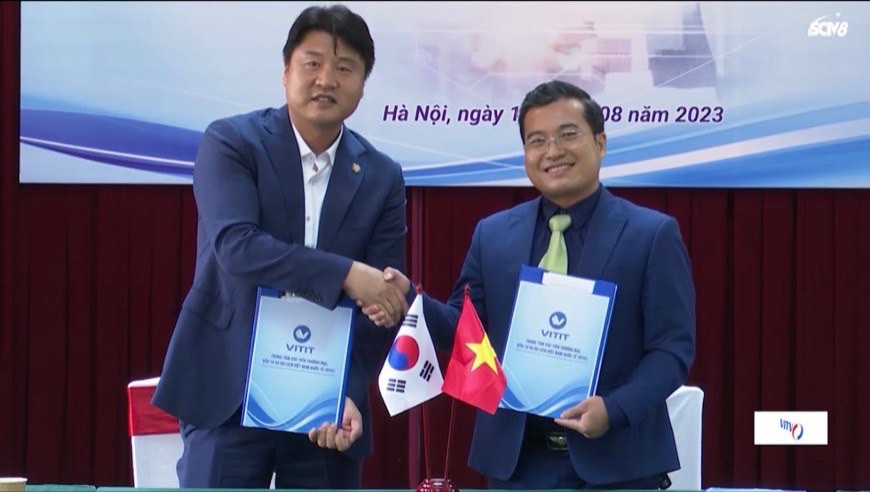
As a result, within just three years, over 90% of critical materials once dominated by Japan were either localized or diversified in supply. Korea’s semiconductor value chain not only recovered but expanded—shifting from “contract manufacturing” to “technology creation.” Korea did not produce everything itself, but developed substitution capability across every vital segment—true “independence within integration.”
This lesson carries great relevance for Vietnam. As the global order restructures, national self-reliance must begin with enterprise self-reliance. Every private business should see itself as a “cell of an independent economy,” capable of responding to volatility and proactively seeking new resources instead of relying entirely on external supply chains.
At the national level, Vietnam is pursuing foundational industries and core technologies; at the enterprise level, specific actions are needed:
- Diversify supply sources, avoiding dependence on a single market or supplier.
- Build supply chain contingency capacity through logistics digitalization, data management, and flexible contracting.
- Invest in R&D and knowledge management, moving beyond technology imitation to mastering technical know-how, design, and branding.
- Develop domestic financial strength, using equity capital and local partnerships instead of overreliance on short-term credit or foreign funds.
These directions require an institutional “bridge” between business and policy—where initiatives are concretized, connected, and scaled. This is precisely the role VAPEDCO can play in the coming phase.
First, the center can develop a National Supply Chain Risk & Resilience Map, helping enterprises identify weaknesses and risks within their value chains—dependence on specific markets, materials, or technologies. This data will form the foundation for proactive contingency planning, sourcing alternatives, and domestic linkages.
Second, VAPEDCO can launch a “Resilience Lab”—an applied economic simulation space where businesses can model supply chain disruption scenarios, rehearse recovery strategies within 30–60 days, calculate risk costs, and optimize cash flow. This would be a powerful training and diagnostic tool, especially for manufacturing and export-oriented firms.
Third, VAPEDCO could collaborate with ministries, industry associations, and international organizations to implement the “Cluster 2030 Program,” promoting the formation of three priority self-reliant clusters: technical textiles, electronic components, and biopharmaceuticals. Within each cluster, large and small enterprises would connect, share technology and supply sources, and co-participate in ASEAN regional value chains.
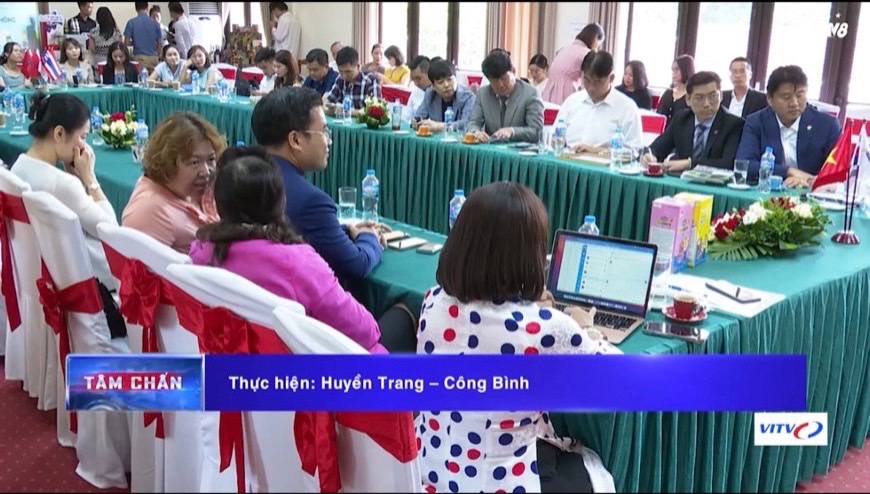
In addition, forecasting and rapid decision-making capacity must be strengthened. VAPEDCO could act as a hub for economic data analytics, publishing a “Private Sector Resilience Index”—a periodic benchmark measuring the adaptability of the private sector to global shocks. With transparent indicators, investors, regulators, and businesses alike could make informed strategic adjustments.
On the policy side, the government should shift from a “subsidy” model to a “co-creation” model in supporting private enterprises. Programs for supporting industries, green transition, and innovation should adopt 50–50 co-financing mechanisms—where enterprises invest capital and the state provides technical assistance or credit guarantees. Public–private partnerships (PPP) should also be encouraged in R&D, logistics infrastructure, and renewable energy—key enablers of reduced external dependency.
Most importantly, a change in mindset is required: independence does not mean isolation—it means resilience through integration. A Vietnamese company may import components from Korea, software from Singapore, and capital from Japan—yet it remains independent if it controls its formula, design, and market. Endogenous strength, not protectionist walls, is the foundation of sustainability.
In the evolving regional landscape, nations and enterprises with the ability to “adapt fast and move fast” will lead. Vietnam now stands at a pivotal juncture: if its private sector embraces the self-reliance paradigm and invests in core capabilities, the country can not only avoid disruption risks but also emerge as a manufacturing and innovation hub of ASEAN.
More broadly, building enterprise-level self-reliance forms the very basis of a resilient national economy. Each enterprise is a “cell,” each value chain a “lifeline.” As individual firms grow stronger, the economy’s collective resilience will be reinforced.
To ensure this process unfolds coherently, Vietnam needs strategic intermediary institutions like VAPEDCO—where knowledge, capital, and international collaboration converge; where enterprises are not only supported but guided toward higher competitiveness. That is how Vietnam’s private sector can step confidently into the new decade—proactive, resilient, and deeply integrated, standing firm amid the world’s ever-shifting transformations.